
You are using an out of date browser. It may not display this or other websites correctly.
You should upgrade or use an alternative browser.
You should upgrade or use an alternative browser.
Prototype Tim Mills' Photos
- Thread starter oldravendale
- Start date


The Austerity 2-8-0's were regarded a bit like dieselization in that, when they arrived in an area, they generally replaced all the older 6F to 7F locos except in the North East. I eventually came around to liking them.
Larry will, I think, know what I mean .....
A WD, in late evening, clanking across Greenfield 'Loop' viaduct, and heard through my bedroom window at a distance of half-a-mile or so, was the signature of the 1960s steam railway for me.
John Isherwood.

oldravendale
Western Thunderer
The WDs were an acquired taste which I, as an observer. acquired quite early on Larry @LarryG .
Thanks for your thoughts, Richard @Gadgie . Often photographed it may have ben but Tim captured it only this once. The loco looks, for a WD anyway, remarkably clean. It reminds me that I saw and photographed a sparkling clean WD outside Darlington Works. I'd put money on it not ever being cleaned afterwards.
And John @cctransuk - I remember hearing the sound of clanking freights passing through Harrow & Wealdstone at night although whether they were WD hauled I don't know. Probably 8Fs. Then I'd hear the shunting and wagons banging together. Quite remarkable as we must have been at least two to three miles away.
Class K1 62048 at Darlington in the mid 1960s – probably 1965. It was allocated to Darlington in November 1959 and moved to West Hartlepool in March 1966 where it was withdrawn on 19th June 1967. (SLS). It was recorded at Darlington Shed by the SLS on 19th September 1964 and had a works visit for a light casual overhaul arriving on 20th November 1964 and leaving on 13th January 1965. (SLS). After withdrawal it was sold for scrap to Garnham, Harris & Elton, Chesterfield in August 1967 and was scrapped by the year end. (BR Database).
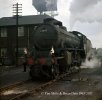
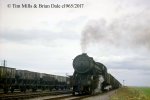
WD 2-8-0 90348, the first picture (img643) being at Sunderland Shed, I suspect although Tim has provided no details. The second picture (img697) is the same loco on a train of coal hoppers at an unknown location, although my description of the train is open to correction. I note a similar train behind the WD. 90348 was a Wakefield engine from May/June 1958 and moved to Sunderland in October/November 1966 followed by withdrawal in August/September 1967. (SLS). On 13th August 1967 it was noted at Sunderland Shed by the SLS, and then on 9th September, the last day of steam working 90348 worked to Dunston and Hylton Colliery. (SLS). After withdrawal it went to Hughes Bolckow’s at North Blyth where it was scrapped in October 1967. (BR Database).

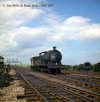
Running almost light engine but with a brake van at an unknown location at some time around 1965 was J27 65879. It’s carrying a 52F North and South Blyth shed plate. The SLS record advises the loco was at North and South Blyth from October 1957 and moved to Sunderland in May/June 1967 where it was withdrawn in August/September the same year. (SLS). It was seen on Sunderland Shed as recorded by the SLS on 13th August 1967. It was next recorded in store at Tyne Dock between September and October 1967 and was seen there on 28th September and 7th October, (WHTS). It went to Thompson’s, Stockton on Tees for scrapping (Yeadon’s Vol 47b) and was scrapped in November 1967.
Edit: Info from Richard @Gadgie proposes that this image "is passing Ryhope Grange Junction heading south in search of loaded hoppers to trip back north to Sunderland South Dock — the gantry is quite distinctive and steam from a locomotive on the South Dock line can be seen underneath it." This fits as img608, post #5893 was at Ryhope and identified as such. Also the date was July 1966.
Brian
Thanks for your thoughts, Richard @Gadgie . Often photographed it may have ben but Tim captured it only this once. The loco looks, for a WD anyway, remarkably clean. It reminds me that I saw and photographed a sparkling clean WD outside Darlington Works. I'd put money on it not ever being cleaned afterwards.
And John @cctransuk - I remember hearing the sound of clanking freights passing through Harrow & Wealdstone at night although whether they were WD hauled I don't know. Probably 8Fs. Then I'd hear the shunting and wagons banging together. Quite remarkable as we must have been at least two to three miles away.
Class K1 62048 at Darlington in the mid 1960s – probably 1965. It was allocated to Darlington in November 1959 and moved to West Hartlepool in March 1966 where it was withdrawn on 19th June 1967. (SLS). It was recorded at Darlington Shed by the SLS on 19th September 1964 and had a works visit for a light casual overhaul arriving on 20th November 1964 and leaving on 13th January 1965. (SLS). After withdrawal it was sold for scrap to Garnham, Harris & Elton, Chesterfield in August 1967 and was scrapped by the year end. (BR Database).
WD 2-8-0 90348, the first picture (img643) being at Sunderland Shed, I suspect although Tim has provided no details. The second picture (img697) is the same loco on a train of coal hoppers at an unknown location, although my description of the train is open to correction. I note a similar train behind the WD. 90348 was a Wakefield engine from May/June 1958 and moved to Sunderland in October/November 1966 followed by withdrawal in August/September 1967. (SLS). On 13th August 1967 it was noted at Sunderland Shed by the SLS, and then on 9th September, the last day of steam working 90348 worked to Dunston and Hylton Colliery. (SLS). After withdrawal it went to Hughes Bolckow’s at North Blyth where it was scrapped in October 1967. (BR Database).
Running almost light engine but with a brake van at an unknown location at some time around 1965 was J27 65879. It’s carrying a 52F North and South Blyth shed plate. The SLS record advises the loco was at North and South Blyth from October 1957 and moved to Sunderland in May/June 1967 where it was withdrawn in August/September the same year. (SLS). It was seen on Sunderland Shed as recorded by the SLS on 13th August 1967. It was next recorded in store at Tyne Dock between September and October 1967 and was seen there on 28th September and 7th October, (WHTS). It went to Thompson’s, Stockton on Tees for scrapping (Yeadon’s Vol 47b) and was scrapped in November 1967.
Edit: Info from Richard @Gadgie proposes that this image "is passing Ryhope Grange Junction heading south in search of loaded hoppers to trip back north to Sunderland South Dock — the gantry is quite distinctive and steam from a locomotive on the South Dock line can be seen underneath it." This fits as img608, post #5893 was at Ryhope and identified as such. Also the date was July 1966.
Brian
Last edited:

simond
Western Thunderer
This make me chuckle when I hear people complaining about being next door to a sound-equipped layout at a show..,Then I'd hear the shunting and wagons banging together. Quite remarkable as we must have been at least two to three miles away

The WDs were an acquired taste which I, as an observer. acquired quite early on Larry @LarryG .
Thanks for your thoughts, Richard @Gadgie . Often photographed it may have ben but Tim captured it only this once. The loco looks, for a WD anyway, remarkably clean. It reminds me that I saw and photographed a sparkling clean WD outside Darlington Works. I'd put money on it not ever being cleaned afterwards.
And John @cctransuk - I remember hearing the sound of clanking freights passing through Harrow & Wealdstone at night although whether they were WD hauled I don't know. Probably 8Fs. Then I'd hear the shunting and wagons banging together. Quite remarkable as we must have been at least two to three miles away.
You could tell a WD - especially at night - by the rythmic 'CLONK-DONK'.
Caused, I gather, by worn 'big end' bearings due to corners cut during their WW2 construction.
JI.

Gadgie
Western Thunderer
I’m pretty sure that J27 65879 is passing Ryhope Grange Junction heading south in search of loaded hoppers to trip back north to Sunderland South Dock — the gantry is quite distinctive and steam from a locomotive on the South Dock line can be seen underneath it.
Richard
—
Richard
—
oldravendale
Western Thunderer
Thanks for your comments, Simon @simond , Tony @Osgood and JL @cctransuk . Also to Richard. I reckon you are right on the ball with that location. img608, post #5893 was at Ryhope and identified as such. I'll bet this one was taken on the same day, shown on the slide mount as July 1966. I've added the info by way of an edit. I wonder whether the second photo of 90348 could also be in the same area.
img703 and img705 are of Standard Class 4 4-6-0 75016 at unknown locations in the mid 1960s. The loco was allocated to Nuneaton in May 1963 then Shrewsbury in June/July 1965 (my preferred possible location for both photos as we know Tim was photographing in the area), then Croes Newydd in March/April 1967 and finally Colwick in June/July 1967 where it was immediately withdrawn – in fact this may have been a book transfer only. (SLS). The loco was scrapped at T W Ward, Killamarsh in June 1968. (BR Database).

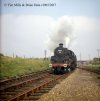
This fits nicely with the photo of 75016 in img703 above as it’s Manor Class 7801, Anthony Manor at an unknown location in the mid 1960s but it was allocated to Shrewsbury in January/February 1963 and withdrawn from there in July 1965. (SLS). It was recorded in store at Shrewsbury from July 1965 to December 1965 (WHTS) and the SLS record it as awaiting disposal at Shrewsbury on 26th March 1966. It was also recorded as seen there on 6th January 1966 (WHTS) and together with the later viewings makes the proposed scrapping date of January 1966 (BR Database) quite unlikely. However the Railway Observer reports it was scrapped at Bird’s, Morriston, Swansea although it gives no date.

Brian
img703 and img705 are of Standard Class 4 4-6-0 75016 at unknown locations in the mid 1960s. The loco was allocated to Nuneaton in May 1963 then Shrewsbury in June/July 1965 (my preferred possible location for both photos as we know Tim was photographing in the area), then Croes Newydd in March/April 1967 and finally Colwick in June/July 1967 where it was immediately withdrawn – in fact this may have been a book transfer only. (SLS). The loco was scrapped at T W Ward, Killamarsh in June 1968. (BR Database).
This fits nicely with the photo of 75016 in img703 above as it’s Manor Class 7801, Anthony Manor at an unknown location in the mid 1960s but it was allocated to Shrewsbury in January/February 1963 and withdrawn from there in July 1965. (SLS). It was recorded in store at Shrewsbury from July 1965 to December 1965 (WHTS) and the SLS record it as awaiting disposal at Shrewsbury on 26th March 1966. It was also recorded as seen there on 6th January 1966 (WHTS) and together with the later viewings makes the proposed scrapping date of January 1966 (BR Database) quite unlikely. However the Railway Observer reports it was scrapped at Bird’s, Morriston, Swansea although it gives no date.
Brian
oldravendale
Western Thunderer
The Standard Class 4 4-6-0 75048 here in img708, 709 and 710 were photographed in the mid 1960s and the location was not advised. However this loco was allocated to Bank Hall in October/November 1955 but moved to Chester in April/May 1966 (SLS) and I believe it’s during this allocation that the loco was photographed. The location is possibly Coton Hill, Chester. After the allocation to Chester the loco moved to Croes Newydd in late May/early June 1966 which gives a narrow window for the photo of May 1966. After Croes Newydd the loco went to Lostock Hall in May/June 1967 and finally Carnforth within the following four weeks where it was withdrawn at the end of July or early August 1968. (SLS). It was recorded out of use at Carnforth on 16th February 1968. (SLS). After withdrawal it moved to Campbell’s, Airdrie where it was scrapped during November 1968. (BR Database).
Now confirmed by various contributors as Coton Hill.


Edit:
Probably a replacement roof.
This is probably the North Box as the South Box was destroyed by a runaway goods train collision on 11/01/1965. Assuming the dates of Tim's photos were taken post January 1965 as there are leaves on the trees.

An unidentified Black 5 on a train with cattle wagons prominent at the head of the train and in the adjacent siding. Believed to be at Coton Hill, Chester and probably in May 1966.
Edit: @David B proposes The low running board and long outside steam pipes running down to the cylinders suggest it might be an 8F rather than Black 5 on the cattle train?

Brian
Now confirmed by various contributors as Coton Hill.
Edit:
Probably a replacement roof.
This is probably the North Box as the South Box was destroyed by a runaway goods train collision on 11/01/1965. Assuming the dates of Tim's photos were taken post January 1965 as there are leaves on the trees.
An unidentified Black 5 on a train with cattle wagons prominent at the head of the train and in the adjacent siding. Believed to be at Coton Hill, Chester and probably in May 1966.
Edit: @David B proposes The low running board and long outside steam pipes running down to the cylinders suggest it might be an 8F rather than Black 5 on the cattle train?
Brian
Last edited:
John Palmer
Western Thunderer
The large building on the skyline to the right-hand side of 709 and 711 strongly resembles (and is in the correct position for) Shrewsbury Prison, so there appears to be a high probability of these pictures showing Coton Hill.
Good grief! The prison is now a visitor attraction! Never foresaw that possibility in the course of my various visits to it (in an entirely professional capacity, I should add).
Good grief! The prison is now a visitor attraction! Never foresaw that possibility in the course of my various visits to it (in an entirely professional capacity, I should add).
simond
Western Thunderer

76043
Western Thunderer
Interesting to note that by that date all the cattle wagons looks to be BR standard type derived from the GWR version, not the diagram 1/350 version.
Would it be an assumption that all the older wooden framed LMS and LNER types were culled at the same time as the 1962 RCH mineral cull?
Tony
Would it be an assumption that all the older wooden framed LMS and LNER types were culled at the same time as the 1962 RCH mineral cull?
Tony

AJC
Western Thunderer
Interesting to note that by that date all the cattle wagons looks to be BR standard type derived from the GWR version, not the diagram 1/350 version.
Would it be an assumption that all the older wooden framed LMS and LNER types were culled at the same time as the 1962 RCH mineral cull?
Tony
Yes, quite reasonably. Massive reduction in the cattle wagon fleet too - the lorry won that one for most flows for pretty obvious reasons so the pre-nationalisation types, especially the wooden framed ones, went fairly early.
Adam

Dan Randall
Western Thunderer
As someone used to seeing slates, I thought this an unusual choice of roofing material on the Signalbox….

I wonder if anyone’s ever tried modelling that?
Regards
Dan
I wonder if anyone’s ever tried modelling that?
Regards
Dan

Eastsidepilot
Western Thunderer
They'd probably be slated for it if they did !As someone used to seeing slates, I thought this an unusual choice of roofing material on the Signalbox….
View attachment 268800
I wonder if anyone’s ever tried modelling that?
Regards
Dan

Last edited:

Yorkshire Dave
Western Thunderer
As someone used to seeing slates, I thought this an unusual choice of roofing material on the Signalbox….

I wonder if anyone’s ever tried modelling that?
Probably a replacement roof.
This is probably the North Box as the South Box was destroyed by a runaway goods train collision on 11/01/1965. Assuming the dates of Tim's photos were taken post January 1965 as there are leaves on the trees.
Arun Sharma
Western Thunderer
I'm guessing that signal box roof is made of corrugated asbestos sheeting. Anyone any ideas when asbestos ceased to be used de-novo for such?Probably a replacement roof.
This is probably the North Box as the South Box was destroyed by a runaway goods train collision on 11/01/1965. Assuming the dates of Tim's photos were taken post January 1965 as there are leaves on the trees.
Yorkshire Dave
Western Thunderer
Asbestos as a roofing (and building) material ceased in the UK with the total ban in 1999. The ban was carried out in stages with blue and brown asbestos being banned in 1985, white asbestos in 1999.
Asbestos itself is naturally occurring mineral of which it's fire and resistant properties were known about for centuries. It's the large scale mining and industrialisation during the 1800s which brought asbestos products to the fore and health issues surrounding Asbestos fibres were known about as early as 1900.
Asbestos itself is naturally occurring mineral of which it's fire and resistant properties were known about for centuries. It's the large scale mining and industrialisation during the 1800s which brought asbestos products to the fore and health issues surrounding Asbestos fibres were known about as early as 1900.