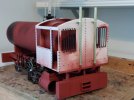
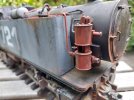
Spikey Faz's G Scale pictures

michael mott

Western Thunderer
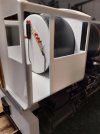
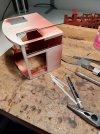
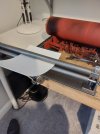
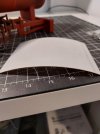
Mike I am curious about the bending roles and the white sheet being rolled. Is it styrene and if not what is it, and how did it stay in shape and not spring back? Nice work on the conversion so far.

Michael
 

spikey faz

Western Thunderer
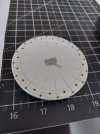
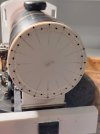
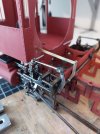
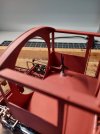
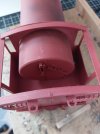
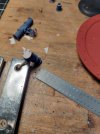
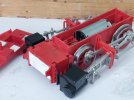
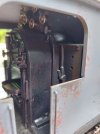
I've reinstalled the reversing gear.

20221005_171344.jpg
20221005_171416.jpg

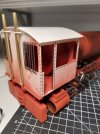
I would really welcome any input as to what other controls should be present in the cab, as I'm a bit vague on this kind of thing! I'm thinking some sort of brake controls, throttle etc, but not coming up with much on the Internet for fireless locomotives. I don't necessarily need to know how the controls work, but what they look like will be very beneficial for me.

20221005_171818.jpg

Cheers.
Mike
 

simond

Western Thunderer
Never been on a fireless loco, but they must have Reverser, throttle and brakes (probably hand and steam, maybe vacuum too?) and a pressure gauge. Probably had sanders, and must have had some kind of lubricators.

I doubt they had water gauges as it doesn’t matter.
 

spikey faz

Western Thunderer
Never been on a fireless loco, but they must have Reverser, throttle and brakes (probably hand and steam, maybe vacuum too?) and a pressure gauge. Probably had sanders, and must have had some kind of lubricators.

I doubt they had water gauges as it doesn’t matter.
I shall probably cobble something together and just hope the more learned WT folk don't look too closely. ;)

Mike
 

PhilH

Western Thunderer
I doubt they had water gauges as it doesn’t matter.

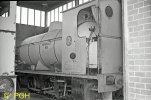
Sorry to contradict Simon, but most fireless locos did have two water gauges, one sometimes at a lower level to allow for the large variation in water level.

9729B.jpg

One is visible on HL 3746/29 at Huncoat Power Station. The locos would be charged with a mixture of superheated water and steam, the water giving off more steam as the pressure reduced hence the amount of water determined how much more steam would be raised.

Note that two gauges are fitted on the rear of the cab frontplate. Some locomotives were fitted with a pressure reducing valve giving a constant tractive effort until the reservoir pressure dropped to the pressure set by the reducing valve. Without the reducing valve the tractive effort would fall all the time from the charging requiring constant adjustment of the regulator. I would assume that the two gauges are one for the reservoir pressure and one for the pressure after the reducing valve, i.e. the pressure actually reaching the cylinders.
 
Last edited:

daifly

Western Thunderer
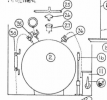
Here's the assembly diagram for the backhead of a CSP Andrew Barclay Fireless kit
Screenshot 2022-10-06 at 07.38.51.png
25 - Regulator
26 - Regulator cowl
27 - Regulator mounting bracket
30 - Gauge glass
35 - Pressure Gauge Tap
36 - Steam Valve Tap
Unnumbered - Pressure Gauge

Dave
 

spikey faz

Western Thunderer
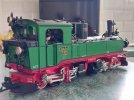
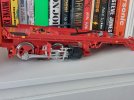
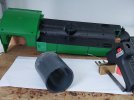
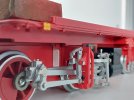
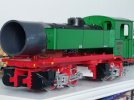
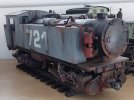
The fireless project stalled as I wasn't happy with the overall dimensions. Something not right, but I'll come back to it in due course. In the meantime I acquired another LGB loco.
20230403_111550.jpg
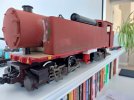
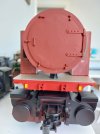
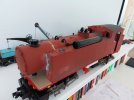
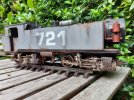
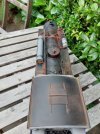
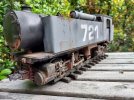
Of course I couldn't leave it alone!
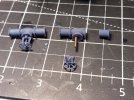
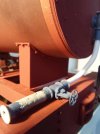
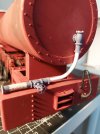
20230405_133140.jpg20230405_133158.jpg20230410_183933.jpg20230410_183941.jpg20230410_190316.jpg
Mike
 
Top