
spikey faz
Western Thunderer
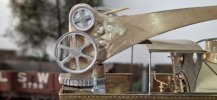
Progress on the crane mechanism continues at great pace! 

Mike
Mike

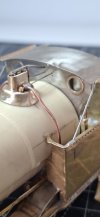

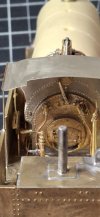

The smokebox front is epoxied (Araldite 5 minute) onto the resin casting. I drilled a few holes into the resin (where it couldn't be seen) to allow the epoxy glue a bit more 'bite' to hold the smokebox front in place. The kit instructions do not recommend using superglue for this.For the resin - metal bits interface, what has been your sticky stuff of choice?


 www.facebook.com
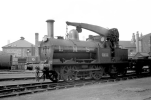
Ah! Some sort of pulley or chain block. Makes far more sense. I'll see if I can cobble together some sort of representation of this, as I'm modelling 3249 in its later years.It might possibly be a chain block, for precision lifts, with the operating chain wrapped around the side nearest the building?
The only other view I can find of it (3249 - no evidence of other engines having the same attachment) is here:
19th century railway enthusiasts | L.N.W.R. 0-4-2 Crane Tank No.3249 , to traffic 1894. | Facebook
L.N.W.R. 0-4-2 Crane Tank No.3249 , to traffic 1894.. photographed post grouping at Crewe Works .. no date. Image source via Reddit
So with the attachment not present in an early LMS view, it must have been fitted in later LMS days.
View attachment 268296

I think Tony was right the first time with the electric supply cable retracting reel for use picking up scrap steel with an electromagnet. It would be a twin reel with a coil spring like a vacuum cleaner cord retractor (but without the ratchet). The would be turbo generator mounted somewhere on the loco to provide the electricity for the magnet. Electro magnets on cranes or excavators are very common now for handling scrap but would have been cutting edge technology when the LMS installed it in the 20s or 30s.Ah! Some sort of pulley or chain block. Makes far more sense. I'll see if I can cobble together some sort of representation of this, as I'm modelling 3249 in its later years.
Mike