Bombardier1923
New Member
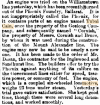
Now that is a very interesting discrepancy, and does make me more inclined to agree on the possibility of it being a different engine. I do wonder if the increased cost could cover the addition of the iron tender the Cornish possessed, £1405 13s 1d seeming reasonable for a four wheeled 1000 gallon iron tender, and the lack of use Tubal Cain saw with the G&MR (supposedly only 38 miles by the time of its sale) would mean Cornish & Bruce effectively bought it new. Indeed, an engine by the name of "Cornish" was in operation with C&B as early as July 1860 when "Bruce" arrived from Vulcan Foundry and assembled in Sunbury (reported in The Age, July 11 1860), which does ask why Cornish & Bruce would purchase another Hawthorns engine when they acquired an near-brand new Hawthorns engine less than 6 months earlier. This, in addition to The Age naming Tubal Cain directly as Cornish and subsequently the source for Phoenix/Ivanhoe on 20 October 1875, does speak to Tubal Cain at least operating with the name Cornish with C&B for a time, but it's not impossible C&B purchased a replacement Hawthorns engine between 1860 and 1863 and bestowed the name to it. Stranger things have happened in railway contracts! I'd be curious then when C&B disposed of the G&MR engine and what became of it.Interesting to see some alternative assumptions regarding the form of Tubal Cain and his brothers. I am not convinced the wing tanks were fitted to the goods locos. They would have made access to the valve gear difficult, the drawings of Goliath at Clunes definitely don't show them in one view and the other looks like something in front of the loco, and on one side only.
The 'Cornish' assembled in Castlemaine was certainly not Tubal Cain renamed 'Cornish'. Bruce paid £3700 for Tubal Cain in January 1860, while the 1868 sales notices state that Cornish cost £5105 13s 1d new. Cornish & Bruce's executors certainly had the records from the partnership. The only things in common between Tubal Cain and the Cornish assembled at Castlemaine were the cylinder dimensions, and they were both built by Hawthorns. Cornish and Bruce (the locomotives) were advertised for sale in the Sydney Morning Herald in March 1867, having failed to sell in 1863, as -"BARGAIN - For SALE, in working order, two locomotive ENGINES and TENDERS (5 feet 3 inch gauge), with duplicates-one a most powerful engine, equal to new : price for the whole , £2500. The duplicates, which alone cost more than this sum, may be constructed into engines to suit any gauge, or to be used as stationary power. Also....."
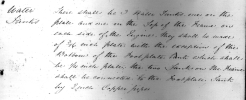
As for the tanks, the original Gooch specifications sent to Hawthorns explicitly call for 3 tanks of 3/16" plate, one beneath the footplate and two atop the frames connected by brass piping. This points to the same wing tanks to the passenger engines being fitted, and that Goliath in Clunes simply has one of the tanks removed (indeed, the lack of lead splasher on the driver side is another clue of its absense). The valve gear and motion does appear to be fairly accessible from underneath (although I realise now the specifications also call for equalisation between all axles, not just the rear two as I'd depicted, which would be another headache for the poor fitters), and would be even more blocked from the footplate on the passenger engines by the large splasher.
Considering how many photos exist of the Bendigo line construction, surely somewhere Cornish is hiding to confirm its outline and lineage more conclusively.